Zadar driving guides
Routed drive times from Zadar Airport, how the motorway tolls are paid, and the rental terms on roads, ferries and borders.
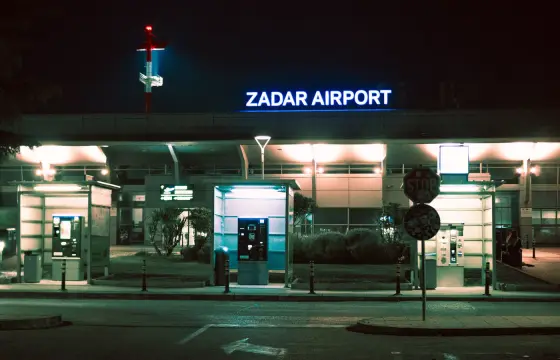 Zadar Airport arrivals, and getting the carWhat happens after you land, and what to bring.
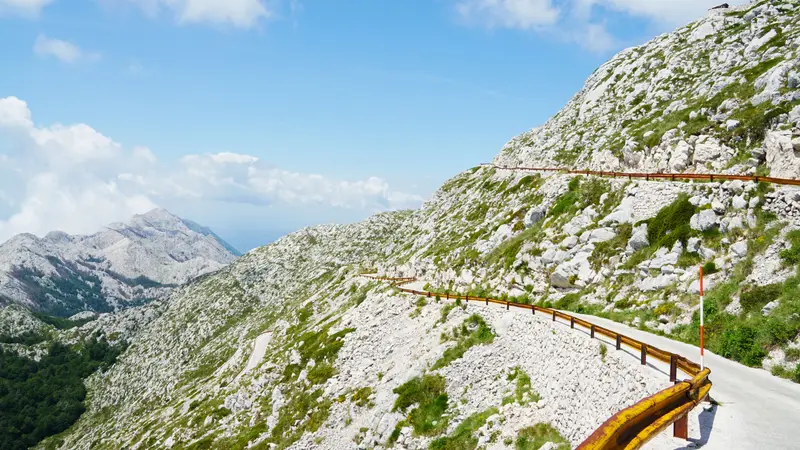 Driving in CroatiaThe A1, the coast road, the road rules and the bora.
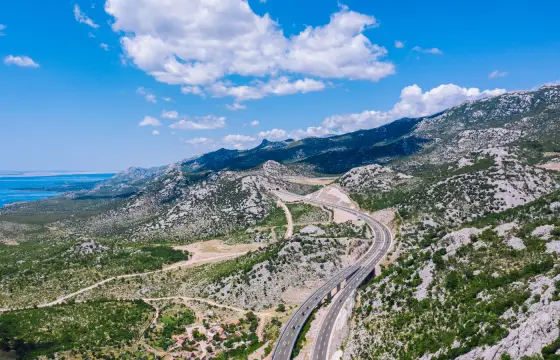 Croatia toll roadsTickets rather than a vignette, and what sets the fare.
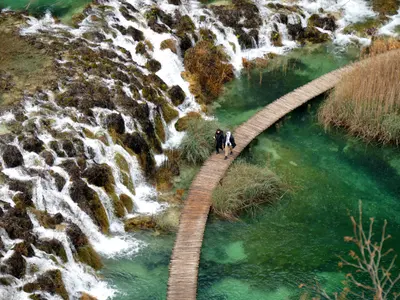 Plitvice Lakes from Zadar, by car2 h 15 from the airport. The drive, and which entrance to aim for.
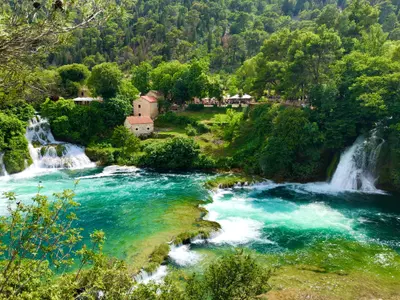 Krka National Park from Zadar50 min from the airport. 50 minutes to Skradin, and the four park entrances.
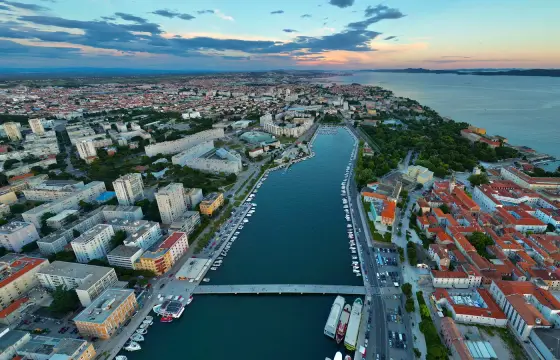 Zadar Airport to the city centre15 min from the airport. Fifteen minutes, and where to park in Zadar.
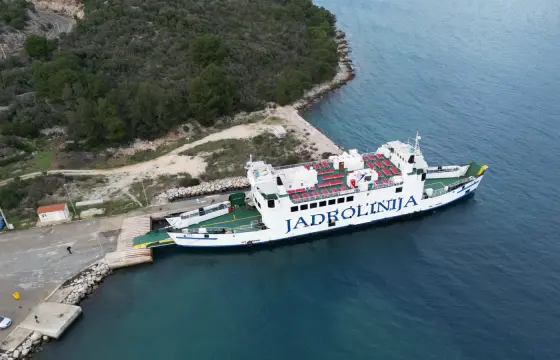 Zadar ferry to the islandsWhich islands, and the rule for taking the car.
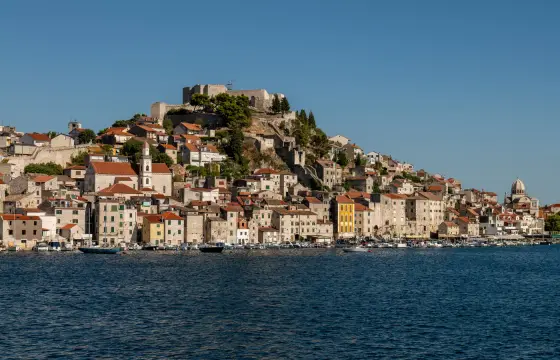 Zadar to Split by car1 h 45 from the airport. 1 h 45 to Split, tolls, stops and the one-way option.
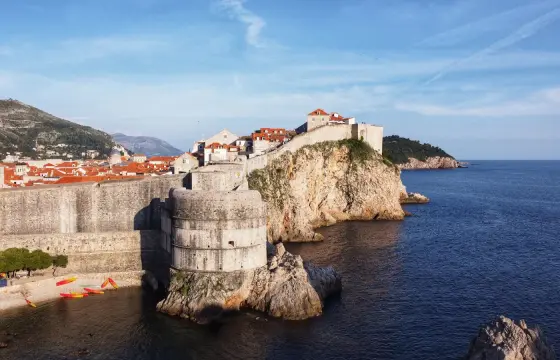 Zadar to Dubrovnik by car4 h 25 from the airport. 4 h 25 south, and what the Neum corridor means.
 Parking in Zadar with a hire carWhere the car goes, and how the zones work.
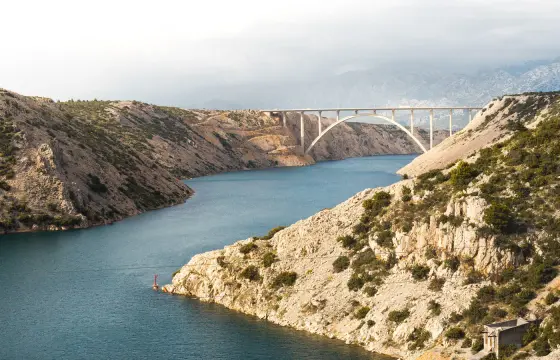 Driving from Croatia to Bosnia in a hire carHow the permission works, and what Neum means.
 Car hire insurance in CroatiaWhat standard cover excludes, and what to do after damage.
 Car hire deposit in CroatiaPayment requirements and when to expect the deposit back.
Why does a car change what a week in Zadar looks like?
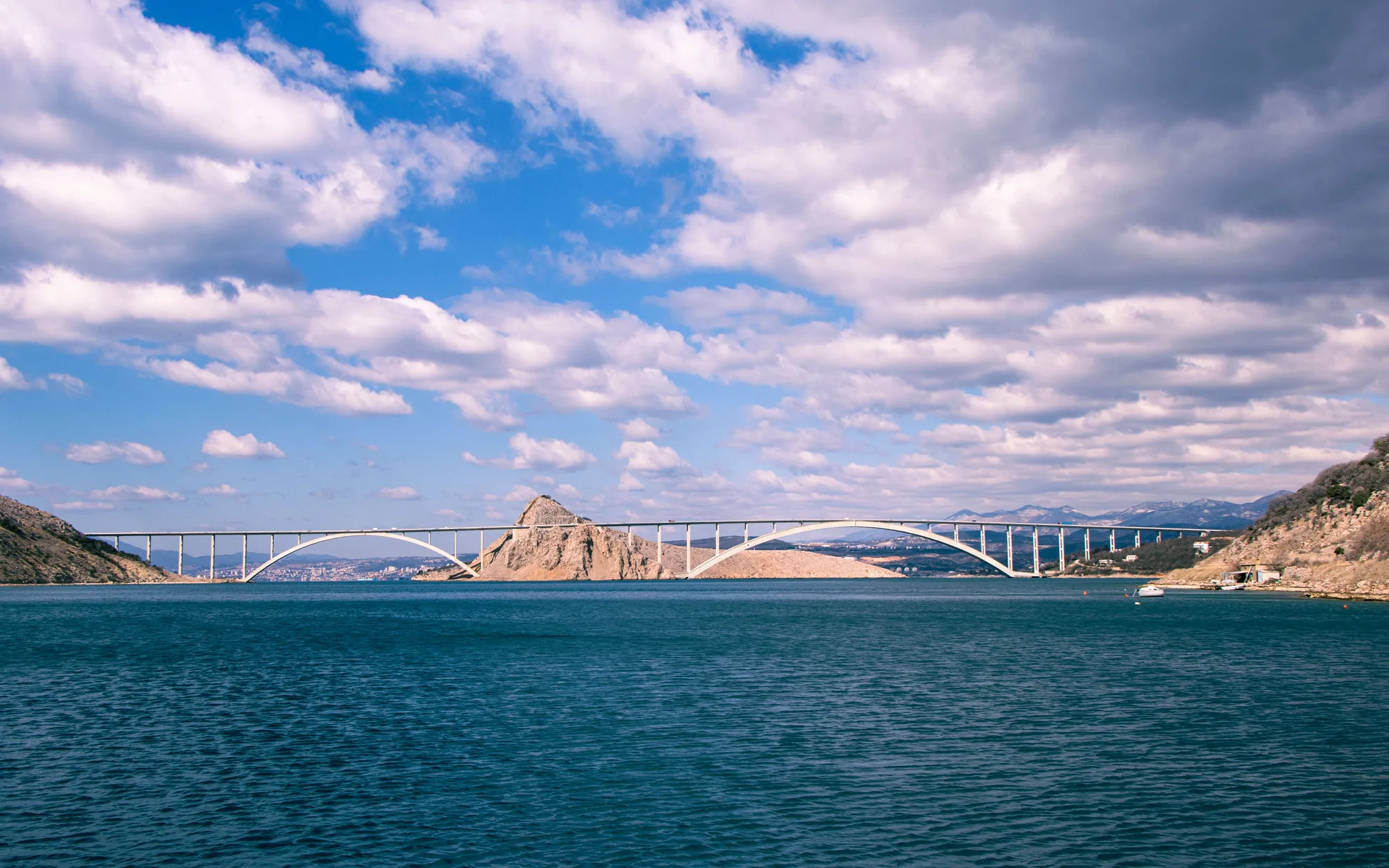
From Zadar Airport by car, Zadar old town is 15 minutes, Krka (Skradin) is 50 minutes, Sibenik is 1 hour, Pag town is 1 hour 10 minutes, Split is 1 hour 45 minutes and Plitvice Lakes is 2 hours 15 minutes. Pag is joined to the mainland by a bridge, the Pag bridge on state road D106. Ugljan, the island nearest Zadar, is reached by Jadrolinija ferry line 431 from Gaženica port to Preko, a crossing of 25 minutes.
The guides above cover Zadar Airport, the drive to the city centre, Plitvice, Krka, Split and Dubrovnik, motorway tolls, parking in Zadar, ferries to the islands, crossing into Bosnia and Herzegovina, insurance, the deposit, and driving in Croatia.
How long is each drive, really?
Plitvice is widely quoted at ninety minutes from Zadar. The routed drive from Zadar Airport is 2 hours 15 minutes over 145 km.
- Zadar old town
- 15 min, 11 km
- Plitvice Lakes
- 2 h 15, 145 km
- Krka (Skradin)
- 50 min, 62 km
- Pag town
- 1 h 10, 59 km
- Sibenik
- 1 h 00, 75 km
- Split
- 1 h 45, 144 km
- Dubrovnik
- 4 h 25, 340 km
- Zagreb
- 3 h 15, 285 km
Each time is routed from Zadar Airport and rounded up to the next five minutes. In bora wind the A1 north of Zadar and the Pag bridge can be closed; HAK and Hrvatske ceste publish the closures.
What do the rental terms actually restrict?
Rental cars are allowed to travel only on paved public roads. Travel by ferry between the islands and the mainland is only possible with prior arrangement, made by email with the rental partner's support before the booking is completed.
Permission to drive outside Croatia is arranged by email with the rental partner's support. Its price and conditions vary with the length of the trip, the type of car and the rental company's policy. Fuel, parking, fines and toll roads are paid by the renter. Some companies retain the deposit for 30 to 45 days after the car is returned, and a fine or an unpaid toll from the rental period is charged to the deposit, with administrative expenses added in the case of fines.
What does the driving itself feel like?
The A1 is a tolled, full-profile motorway. Between the Bosiljevo and Ravča junctions it runs through two twin-tube, one-way tunnels of about 5.7 to 5.8 km, Mala Kapela and Sveti Rok. Traffic on the A1 peaks in July and August. The D8 state road runs along the coast through Zadar, Split and Dubrovnik.
Croatia has no motorway vignette. On HAC motorways, including the A1 serving Zadar, you take a ticket at the entrance and hand it in and pay at the exit. The toll depends on the distance and the vehicle class, and a two-axle car up to 1.90 m high is Class I. The toll is paid in cash in euros, by card or by ENC device. Arriving at the exit without a valid ticket record costs double the toll for the longest route on that motorway from the exit point.
The transmission, the seat count, the mileage limit and the deposit are shown on each car before you pay.
Do I need to worry about the roads themselves?
Under Croatia's Road Traffic Safety Act, cars must drive with daytime running lights or dipped headlights on in daytime from 1 November to 31 March, and with dipped headlights in every tunnel. Stopping, parking, turning round and reversing in a tunnel are banned. The blood alcohol limit for car drivers is 0.50 g/kg; it is zero for professional drivers and for young drivers holding a Croatian licence. A car must carry a warning triangle, a first-aid kit and a reflective vest.
Winter equipment is compulsory on the designated winter sections of public roads from 15 November to 15 April. For a car that means four winter tyres, or four summer tyres with at least 4 mm of tread plus snow chains for the driven wheels.
The historic core of Zadar's peninsula is a pedestrian zone that vehicles enter only with a City permit. Obala i lučice runs paid public parking on parts of the peninsula and on Branimirova obala, paid at a meter, by SMS to the number shown for the zone, or through the e-Parking app. In Zone 1 the maximum stay is 3 hours from 15 June to 31 August. Garage Center at 112. brigade ZNG 1 has 630 spaces and is open 24 hours.
What do you need before you collect the car?
The driver needs a valid national driving licence with details in Latin script, and its expiry date must be no earlier than the end of the rental. Copies and electronic licences are not accepted. The minimum age and driving experience are listed on each car. A car may require a physical embossed credit card in the main driver's name; where a debit card is accepted, that is specified during booking and in the voucher.
The phone number given at booking, with its country code, must be reachable the day before pick-up and throughout the rental. Service quality claims are not accepted if the renter could not be reached by phone or messenger. A phone on an EU mobile network pays domestic rates for calls, texts and data in Croatia, within the operator's fair use policy.
Most cars bookable at Zadar are based at Zadar Airport, and the rest at a rental office in the city. The voucher states where the car is handed over. The car is returned with the same level of fuel it was collected with.