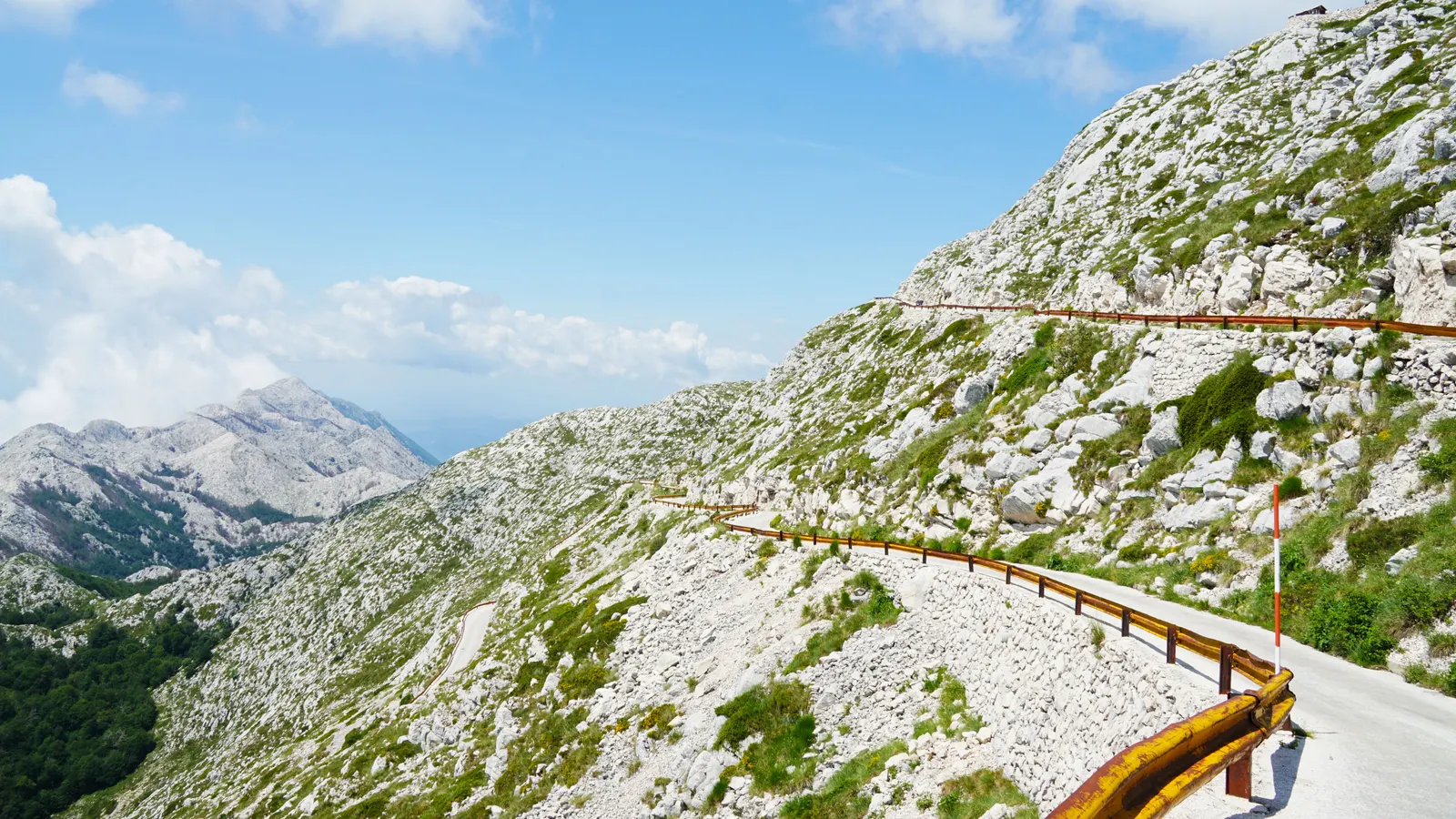
Driving in Croatia
Driving in Croatia runs under the Road Traffic Safety Act, and a hire car from Zadar Airport also runs under the rental conditions for Croatia.
How good are the roads in Croatia?
The A1 motorway runs from Zagreb past Zadar and Split and is open as far as the Ploče interchange and the Karamatići toll station. On 13 September 2026 the road-status page of Hrvatske autoceste (HAC), the motorway operator, still listed Ploče to Karamatići as its southernmost section. It is a full-profile motorway.
HAC's 2025 figures give the whole A1 an average daily traffic of 47,984 in August, 40,948 in July, 27,907 in September and 11,533 in January.
By car from Zadar Airport, Zadar old town is 15 minutes (11 km), Sibenik 1 h 00 (75 km), Split 1 h 45 (144 km), Zagreb 3 h 15 (285 km) and Dubrovnik 4 h 25 (340 km). Transmission, seats and deposit are shown on each of the cheapest cars at Zadar Airport before you pay.
Which road rules apply to a hire car in Croatia?
Under the Road Traffic Safety Act, cars must drive with daytime running lights or dipped headlights on in daylight from 1 November to 31 March. Dipped headlights are required in every tunnel all year. A passenger car must carry a warning triangle, a first-aid kit and a reflective vest, and the driver must wear the vest when doing things beside the car on the road.
Winter equipment is compulsory from 15 November to 15 April on the designated winter sections of public roads, about 839 km of motorway and about 1,863 km of state and county roads, whatever the weather. For a car it means four winter tyres, or four summer tyres with at least 4 mm of tread plus snow chains for the driven wheels.
The alcohol limit for car drivers is 0.50 g/kg of blood, or 0.5 per mille. A zero limit applies to professional drivers, driving instructors, C and D category drivers, and young drivers, whom the law defines as drivers under 24 holding a licence issued in Croatia.
Children shorter than 150 cm must travel in a child seat or booster, except that a child between 135 and 150 cm may use the adult belt on a seat that is not a front seat. A rear-facing child seat may not go on a seat protected by a front airbag unless that airbag is deactivated.
The minimum driver age and driving experience are listed on each car's page and can differ between similar models, and the rental agent can refuse the car to a driver who does not meet them. Each car also shows its transmission, and the search has an automatic filter for hiring an automatic at Zadar Airport. The cars also list the deposit each one asks for.
- Lights
- Daytime running lights or dipped headlights in daylight, 1 November to 31 March; dipped headlights in tunnels all year.
- Vest and triangle
- A triangle, a first-aid kit and a reflective vest are compulsory. The vest is worn when working beside the car on the road.
- Winter kit
- Required on designated winter road sections, 15 November to 15 April.
- Alcohol
- 0.5 per mille for car drivers; zero for professional drivers and for Croatian-licensed drivers under 24.
What is the coast road like?
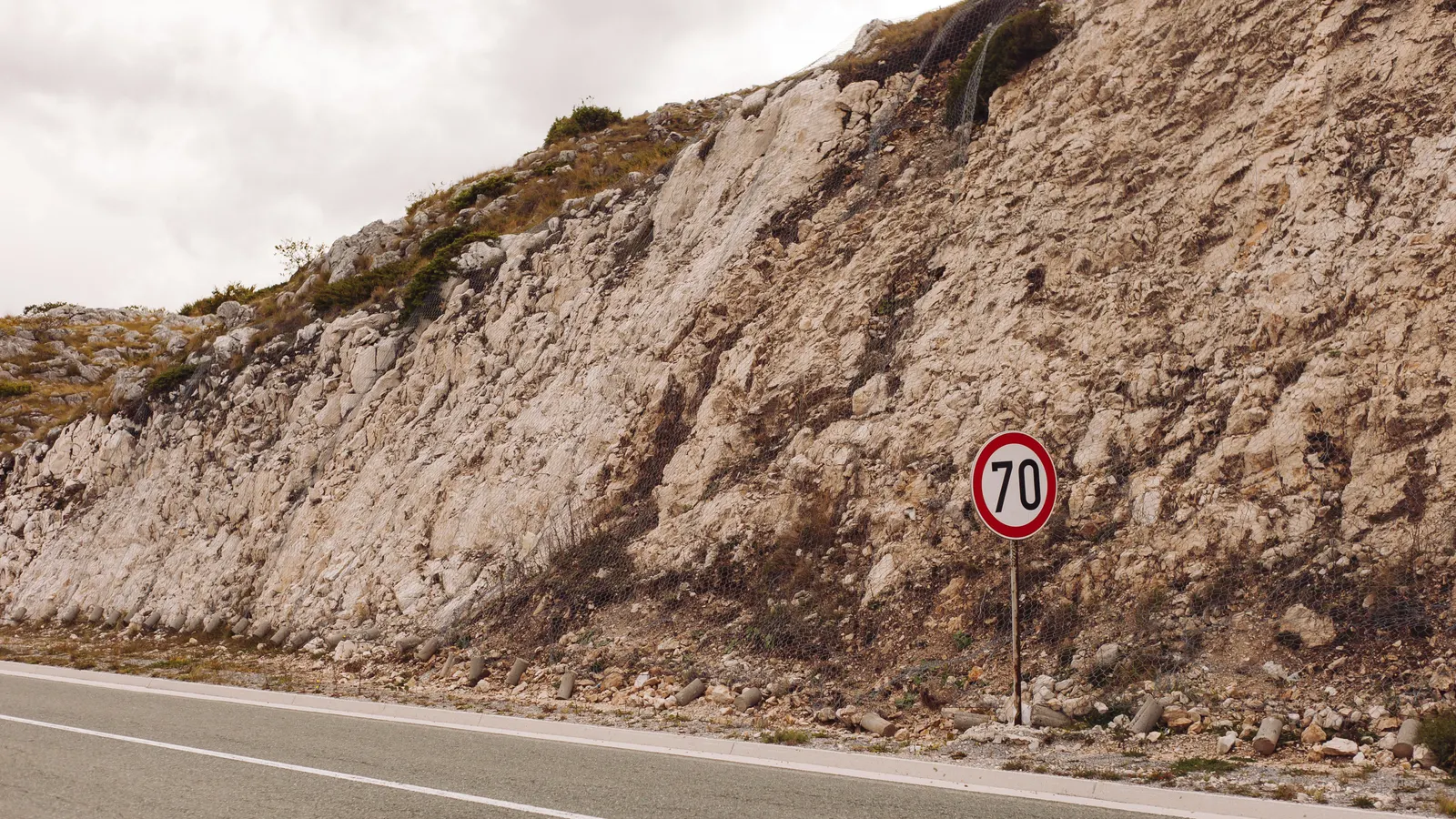
The D8, the Adriatic coast road, is a state road running from Pasjak on the Slovenian border through Rijeka, Zadar, Split and Dubrovnik to Karasovići on the Montenegrin border. The 2024 road classification gives its length as 657.7 km.
South of the A1's end at Karamatići, drivers heading for Dubrovnik continue on the D8 and the Pelješac bridge access roads, which join the D8 at Duboka. The old coast road through Neum crosses about 9 km of Bosnia and Herzegovina, with two border crossings, Klek/Neum 1 and Zaton Doli/Neum 2; the Pelješac Bridge route stays in Croatia.
In the bora of 6 April 2025 the D8 between Karlobag and Sveta Marija Magdalena was closed to all vehicles, as was the Dubrovnik bridge on the D8.
What is the bora, and does it matter?
The bora is a strong, gusty wind off the land that speeds up as it crosses the coastal mountains and falls down their slopes. The Croatian Encyclopaedia names the Velebit Channel and the Nin bay near Zadar among the places it blows hardest, and records that bora of 20 to 35 m/s is frequent on the coast between Trieste and Dubrovnik and interrupts traffic at exposed places.
In bora conditions the A1 between the Sveti Rok and Posedarje junctions and the Pag bridge (DC106) have been closed to all traffic, as on 15 November 2024 and 6 April 2025, or left open only to passenger cars, as on 2 October 2025. On 15 November 2024 the DC54 from Maslenica to Zaton Obrovački was also closed, and passenger cars were detoured on state roads through Gračac, Obrovac and Karin. HAK and Hrvatske ceste publish these closures.
What about tunnels, bridges and parking?
Mala Kapela and Sveti Rok, the two long tunnels on the A1, are twin-tube tunnels with one-way traffic in each tube. Mala Kapela's tubes are 5,821.77 m and 5,780 m long, and HAC calls it the longest tunnel in Croatia; Sveti Rok's are 5,768.5 m and 5,687 m. In a tunnel the driver must not stop, park, turn round or reverse, and overtaking is banned in tunnels on roads with one lane in each direction.
Pag is joined to the mainland by the Pag bridge on state road DC106, and Pag town is 1 h 10 (59 km) from Zadar Airport. Taking a rental car on a ferry to the islands or back to the mainland needs prior arrangement with the rental partner's support before the booking is completed.
The historic core of the Zadar peninsula is a pedestrian zone, and no vehicle may drive into it without a City permit. Public paid parking in Zadar is run by Obala i lučice under a City of Zadar concession and paid at a meter, by SMS to the zone's number or through the e-Parking app.
What does the rental agreement add on top of the law?
Under the rental conditions for Croatia, rental cars are allowed to travel only on paved public roads. Travelling by ferry between the islands and the mainland needs prior arrangement with support before the booking is completed. Permission to drive outside the country is arranged in advance by email, and its price and conditions vary with the length of the trip, the type of car and the rental company's policy. The full wording is in the eighteen clauses of the Croatia rental conditions.
Standard insurance does not cover damage to the wheels, undercarriage, windscreen or interior of the car. The insurance is invalid in the event of deliberate damage caused by intentional vandalism or neglect.
After an insured event the renter must notify the rental agent immediately and obtain a police report, unless otherwise agreed with the agent. The conditions say that failing either cancels the insurance issued for the car and makes the renter fully responsible.
Fuel, parking, fines and toll roads are the renter's cost.
Questions
Is driving in Croatia difficult?
The rules a visitor meets are daytime lights from 1 November to 31 March, dipped headlights in tunnels, a 0.5 per mille alcohol limit for car drivers, and a compulsory triangle, first-aid kit and reflective vest. Split is 1 h 45 from Zadar Airport by car and Zagreb 3 h 15, both on the A1.
Do I need to drive with headlights on in Croatia?
From 1 November to 31 March, yes, including in daylight: daytime running lights or dipped headlights. In tunnels, dipped headlights are required all year.
What is the drink-drive limit in Croatia?
0.5 per mille for car drivers. The limit is zero for professional drivers, driving instructors, C and D category drivers, and drivers under 24 with a Croatian-issued licence.
Do I need winter tyres in Croatia?
Winter equipment is required on designated winter road sections from 15 November to 15 April: four winter tyres, or four summer tyres with at least 4 mm of tread plus snow chains for the driven wheels.
Can I take the hire car onto a gravel track?
No. Rental cars are allowed to travel only on paved public roads.
What happens if a fine arrives after I fly home?
Fines are the renter's cost. If the rental company is invoiced for one from your rental period, the amount and the administrative costs are charged to the deposit.